


The 6×1 ratio is not just a minor detail. It is the foundation of the food retail sector
For decades, the Brazilian supermarket sector has been built on a silent pillar: the 6×1 model. Working six days and taking one day off is not a cultural preference. It is an operational response to a business that operates seven days a week, with peak periods concentrated at weekends and extremely tight margins.
Constitutional Amendment Bill 148 of 2015, particularly following the amendments approved by the Committee on the Constitution and Justice in 2025, directly addresses this very pillar. For the first time, the 6×1 rotation system is no longer merely a practice open to question; it is now structurally precluded by the text of the Constitution.
What will actually change as a result of PEC 148
The latest version of the PEC introduces three points which, taken together, make the 6×1 rota impracticable in the food retail sector:
A limit of up to five working days per week
Requirement for at least two days’ paid weekly rest
Full pay retained, even with reduced working hours
In practice, this does away with the six-day working week for employees. Not as a result of negotiation, but by constitutional design.
The planned transition maintains the 44-hour week until the end of the year in which the legislation is enacted, reduces it to 40 hours in the following year, and continues down to 36 hours per week. However, the most significant impact is not merely the reduction in hours. It is the break with the existing rota model.
Why is the supermarket sector feeling the pinch more than other sectors?
The supermarket sector operates under very specific conditions:
Shops open from 12 noon to 6 pm every day
Open seven days a week
High labour density per square metre
Reliance on rotating shifts to cover peak periods
Net margins of between 1.5 and 3 per cent
In an environment like this, the 6×1 ratio is not a luxury. It’s what strikes the right balance between cost, coverage and service levels.
By removing this tier, the supermarket needs to redesign its entire operational framework.
The direct impact of the abolition of the 6×1 rota
Complete re-engineering of stopovers
With staff working just five days a week, this leads to more shifts, more rota changes, greater management complexity and less flexibility in covering absences and peaks in demand.
Inevitable increase in headcount
The reduction from 44 to 36 hours represents a decrease of around 18 per cent in the number of hours available per person. To maintain the same level of service, it will be necessary to take on between 15 and 25 per cent more staff, depending on the type of shop.
Structural increase in costs
Salaries cannot be cut. Overhead costs rise proportionally. In a sector with minimal profit margins, this puts direct pressure on EBITDA and makes operational efficiency a matter of survival.
The weekend becomes a critical bottleneck
With two days off each week – preferably on Saturdays and Sundays – supermarkets are facing staff shortages precisely on the days when turnover is highest.
The result is predictable:
Higher cost of premium labour
Operational stress at peak times
Drop in service level
A genuine debate on Sunday closing
Closing on Sundays is no longer taboo
Since March 2026, supermarkets in Espírito Santo have been closing on Sundays under the terms of a collective agreement. The trial will run until October, with a review scheduled.
This development highlights something important: Sunday closures are no longer an ideological issue but have become a tool of operational management to deal with the clash between costs and working hours.
The hidden risk posed by the end of the 6×1 rota
Closing shops on Sundays or operating with minimal staff has a side effect that is rarely discussed: long periods without human inspection.
A typical shutdown results in around 34 hours without operational presence, from Saturday evening until Monday morning.
During this time, faults in refrigeration systems, cold stores or display units can develop unnoticed. When the shop reopens, the situation may involve widespread spoilage of goods, financial loss, health risks and damage to the shop’s reputation.
With fewer staff in the shop, the operational risk increases non-linearly.
Automation is no longer just a strategy. It has become infrastructure
The abolition of the 6×1 rota is accelerating an inevitable transformation.
Supermarkets are now relying more on:
Building automation
Continuous monitoring of refrigeration, power and HVAC
Smart alarms and automatic prioritisation
Remote support and 24/7 call centres
Interestingly, a constitutional amendment designed to protect jobs may actually accelerate the replacement of low-skilled work with automated systems. Not for ideological reasons, but for reasons of operational mathematics.
Large chains are able to invest. Regional chains are seeing their margins squeezed. Independent shops face a real risk of going out of business.
Is it possible to offset energy costs?
When implemented effectively, Sunday closures can significantly reduce energy consumption.
Based on NEO’s operational data, closed and properly managed shops consume between 40 and 60 per cent less energy during this period, representing a reduction of around 7 per cent in total monthly consumption.
But this benefit can only be realised through automation and continuous monitoring. Without technology, the risks outweigh the benefits.
What will change for supermarkets from now on?
Whatever the final outcome of the constitutional amendment, one thing is already clear. The 6×1 ratio is no longer a given.
Supermarkets will have to choose between:
Raise prices
Reduce service level
Reduce opening hours
Automate aggressively
Or combine all these levers
Final summary
The debate over the 6×1 rota is not a labour issue. It is a structural one.
By rendering this model unviable, PEC 148 is forcing a radical reorganisation of the food retail sector. Fewer staff in-store, shorter opening hours and greater operational risk call for a clear response.
For supermarkets, efficiency is no longer a competitive advantage but a prerequisite for survival. For those operating critical infrastructure, monitoring and automation are no longer merely supplementary tools but form the very foundation of the business.
In short, the end of the 6×1 rota does more than just reduce working hours. It redefines how the supermarket operates.
With the end of the 6×1 rota, operating with fewer staff has become the norm.
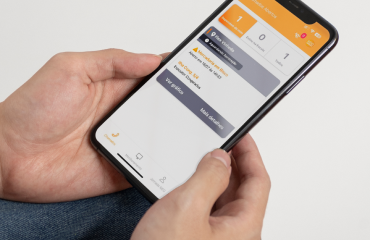
NEO helps your shop maintain control, efficiency and operational security 24/7, even with reduced staff numbers.
👉 Try NEO and see how you can turn data into real operational control. Click here!


 Portuguese (Brazil)
  Portuguese (Portugal)
  Spanish
  English
  French